WHEN
Wednesday, 11 February, 2026 starts at 19:30 - 21:00
WHERE
Crosthwaite Parish Rooms
Main Street
Keswick
CA12 5NN
DETAILS
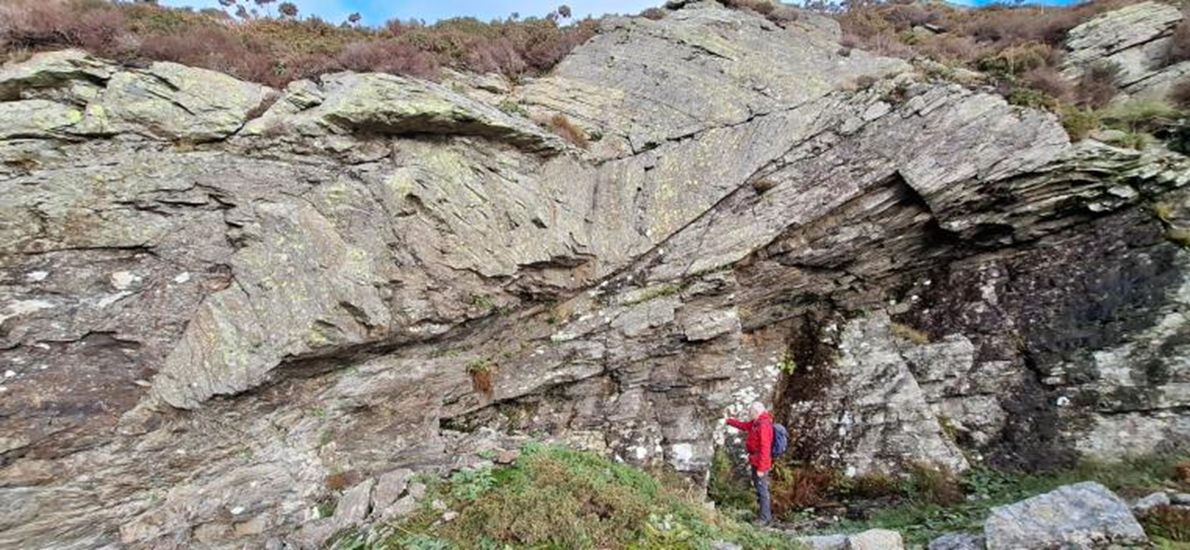
Dr Alastair Baird (Kingston University) will give a talk on “A consideration of Acadian arcuate fold trends in north Wales and the southern Lake District”.
Alastair graduated from Bedford College London in 1975, with a 1st class Hons. degree in Geology. In 1976 he obtained an MSC with Distinction, from Imperial College in Structural geology & Rock Mechanics..
In the summer of 1976 he returned to Bedford College London to commence a PhD into the structural & metamorphic geology of the Moine rocks of the Scottish Highlands around Glenfinnan. 4 years later he became a research assistant for 3 years to Dr D Powell, working on rocks from adjacent areas.
In 1983 he began 3 years of Post Doctoral Research in Durham with Prof John Dewey into the tectonics of the Pennine Alps in Switzerland & Italy.
In 1986 he left Durham, submitted his PhD, (after completing the Post Doc research ), and started work as a lecturer in what was then Kingston Polytechnic, but subsequently became Kingston University. He lectured in Kingston for 31 years, before retiring in 2017.
From 1986 to 1996 he regularly consulted for major Oil Companies, working mostly in Tunisia, but also in the Italian Alps, the Italian Southern Apennines, the Black Sea coast of Northern Turkey (with Danny Clark-Lowes), Cuba and latterly on the potential Shale Gas deposits of the UK..
In 1996 he started consulting on the Lead – Zinc deposits of Northern Tunisia, and did so for about 12 years, working as an exploration geologist and subsequently as a Director of Maghreb Minerals Plc.
After retirement he moved to Colwyn Bay. In 2023 he resumed geological activity in north Wales, revisiting the Ogwen – Idwal area of Northern Snowdonia, where he’d previously published a short paper in 1999. Since then he’s done additional fieldwork in Snowdonia, regularly worked with ‘GeoMon’ in Anglesey and lectured to the Liverpool Geol. Soc., the North Wales Geol.Soc. and the NW Regional Group of the Geological Society.
In the next few months he will be lecturing to the u3a Llandudno Group, and then leading them on a field trip around the Idwal – Ogwen area. In the autumn he’ll be co-leading the Yorkshire Geol Soc on a 4-5 day trip to Anglesey.